

Best Cross-Platform Frameworks in 2025: Flutter vs React Native vs Kotlin Multiplatform
What You Should Choose in 2025: Flutter vs React Native vs Kotlin Multiplatform
Choosing the right cross-platform framework can define your app’s future.
In 2025, businesses expect mobile apps to work seamlessly across devices — without skyrocketing development costs. That’s where cross-platform frameworks come in.
But with Flutter, React Native, and Kotlin Multiplatform competing head-to-head, choosing the right one for your project isn’t just a technical decision — it’s a strategic one.
Once you have decided whether to choose a cross-platform or native versionfor your project, it is worth taking a look at the best options.
Let’s compare the three most popular options shaping the app-development landscape this year.
1. Flutter — Google’s Full-Stack Powerhouse
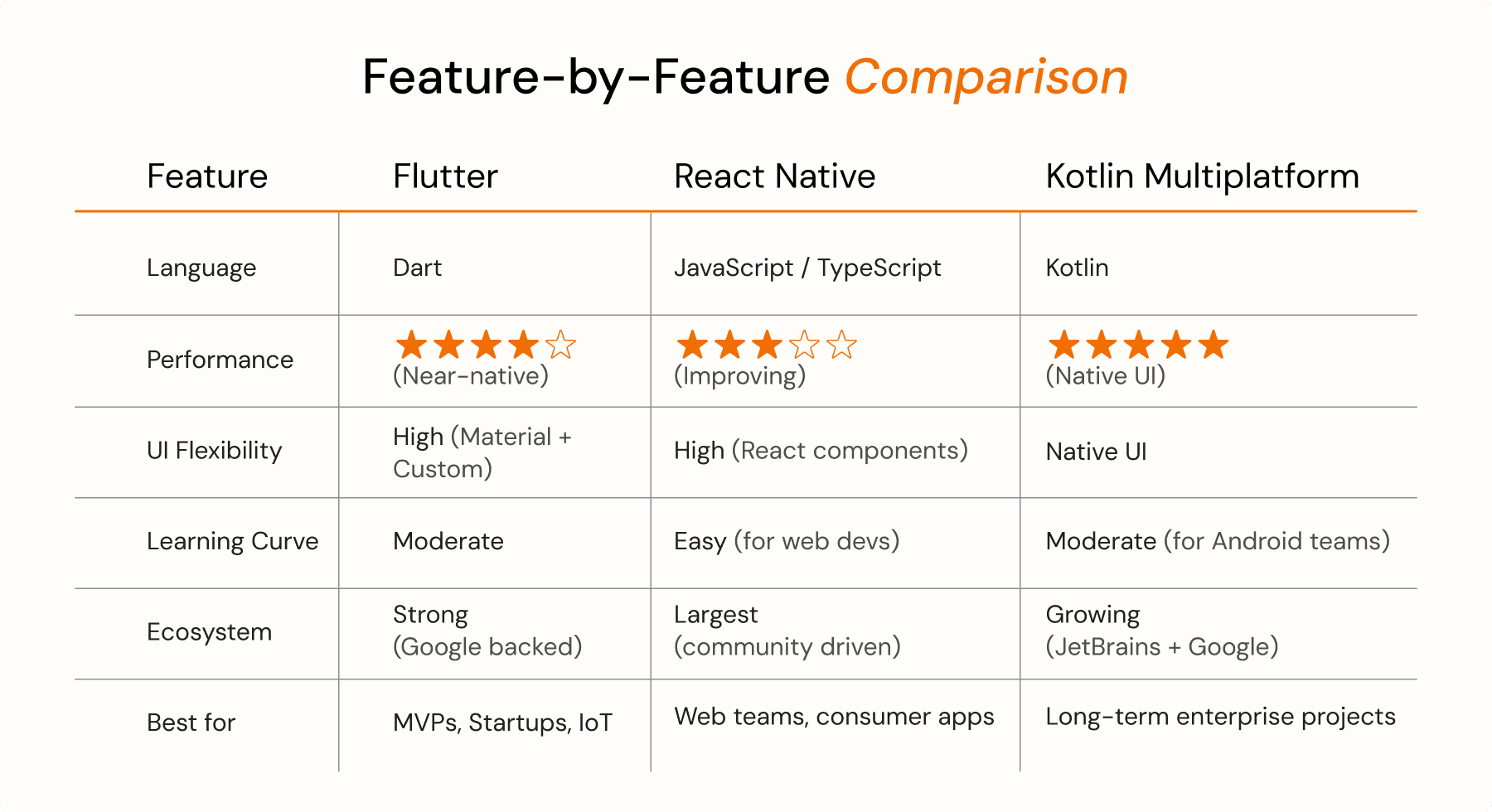
Flutter has matured into one of the most stable and flexible frameworks for cross-platform mobile, web, and desktop development. Built and maintained by Google, Flutter uses the Dart language and offers a unified UI toolkit that compiles natively to ARM code.
Why Flutter dominates in 2025
- Unified UI & UX: A single codebase delivers consistent interfaces on Android, iOS, Web, and Desktop.
- Performance close to native: Compiles directly to machine code — no JavaScript bridges.
- Rich widget ecosystem: Ideal for pixel-perfect design and advanced animations.
- Flutter 3 & beyond: Full Material You support, Impeller Engine, and better WebAssembly integration.
When Flutter makes sense
- Startups validating ideas quickly
- Enterprises needing uniform UI across devices
- IoT & embedded projects where performance matters
💡 Our Grow Sensor IoT app uses Flutter + BLoC architecture to deliver real-time data visualization across platforms.
2. React Native — Facebook’s Versatile Ecosystem
Backed by Meta and a massive open-source community, React Native remains the go-to choice for teams familiar with JavaScript or TypeScript.
Why React Native stays relevant
-
Ecosystem depth: Thousands of libraries, plugins, and community packages.
-
Hot Reloading: Near-instant code updates for faster iteration.
-
Integration flexibility: Works well with existing web and backend stacks (React, Node.js, Express).
-
Cross-platform performance: Hermes engine + Fabric Renderer make UI rendering faster than ever.
Ideal use cases
-
Businesses already using React for web
-
MVPs and startups needing fast prototyping
-
Apps with dynamic UI and frequent updates
💡 Example from us: rePRO, a CRM-connected app, was built with React Native to unify iOS and Android user experiences while maintaining seamless API integration.
3. Kotlin Multiplatform — JetBrains’ Pragmatic Solution
Unlike Flutter or React Native, Kotlin Multiplatform doesn’t try to replace native UIs — it shares business logic across platforms while keeping native UI layers intact.
This means you get native performance where it matters most and shared logic where efficiency counts.
Key advantages
- Native look & feel: UI built with SwiftUI / Jetpack Compose.
- Shared logic: Networking, data storage, business rules.
- Easy adoption: Integrate incrementally into existing Android / iOS apps.
- Enterprise readiness: Perfect for long-term maintainability.
When to choose Kotlin Multiplatform
- You already have a native Android team.
- You need strict platform compliance (finance, healthcare, IoT).
- You want a gradual migration path to shared code.
💡 In IoT projects like Sky Protect, Kotlin’s robust backend integration and typed architecture help ensure security and stability at scale.
Developer Community & Industry Adoption
According to 2025 Stack Overflow trends:
- Flutter adoption among startups → 43%
- React Native remains stable → 35%
- Kotlin Multiplatform growth → +120% YoY in enterprise projects
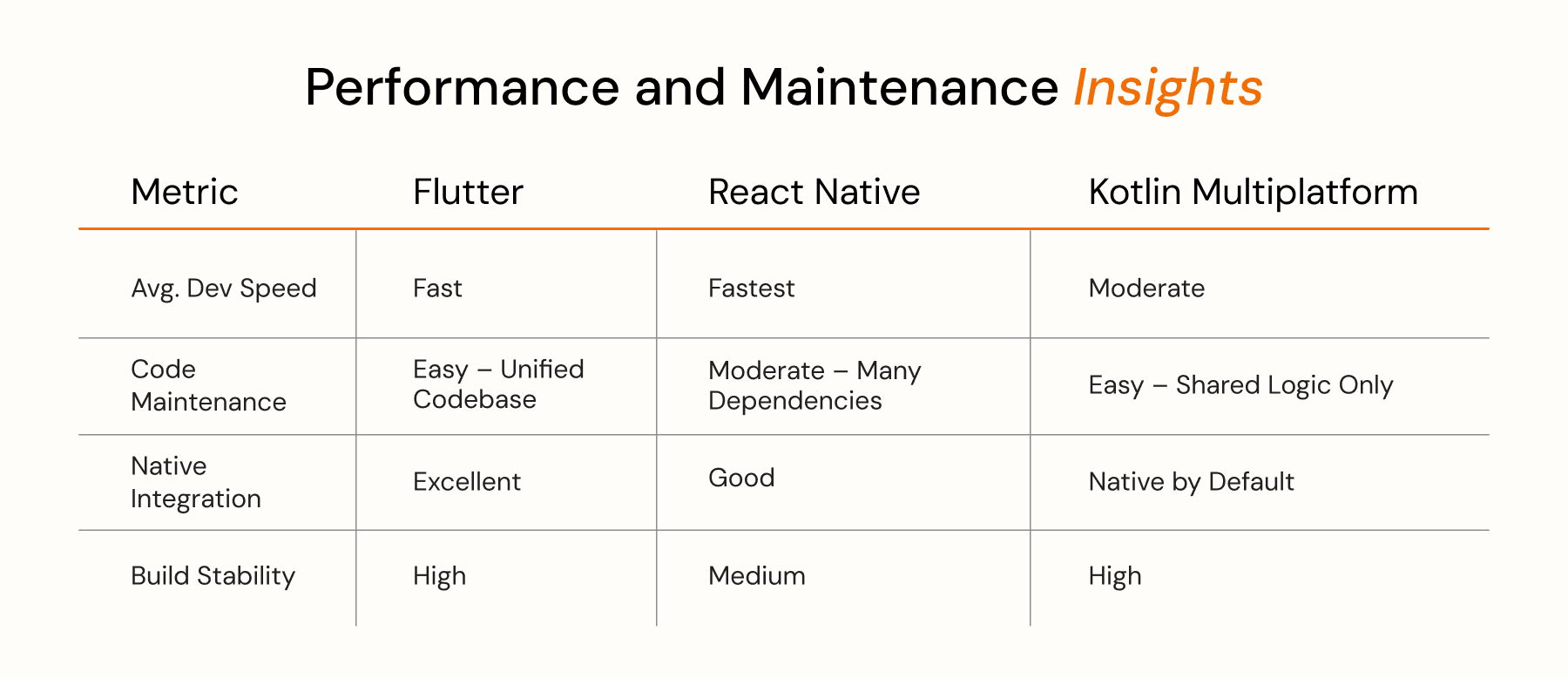
The trend is clear — companies seek frameworks that balance speed, performance, and longevity.
Predictions for 2025 and Beyond
- Flutter will remain the default choice for rapid MVP delivery and IoT apps.
- React Native will evolve through Fabric and TurboModules to match Flutter’s performance.
- Kotlin Multiplatform will gain traction in corporate and regulated environments (healthcare, finance, insurance).
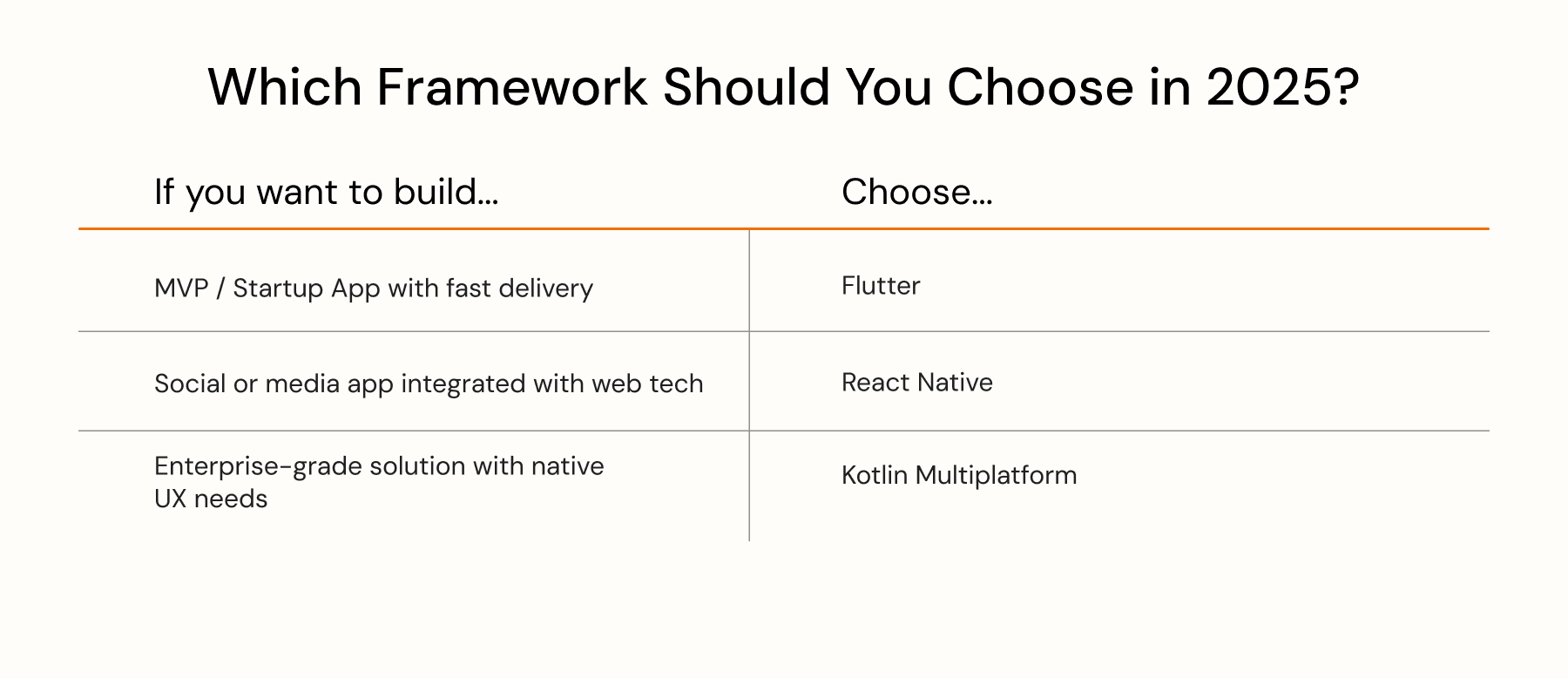
Ultimately, your choice depends on your team’s skills, product goals, and growth strategy.
At Mood Up, we’ve helped clients across industries — from IoT ( Sky Protect ) to HealthTech ( INTU Meditation ) — select and implement the right framework for their vision.
Let's sum up
Cross-platform development in 2025 isn’t just about writing less code — it’s about building smarter, more sustainable software that evolves with your business.
Flutter, React Native, and Kotlin Multiplatform each bring unique strengths to the table.
Choosing the right one starts with understanding your product goals — and partnering with a team that can translate them into technical clarity.
💡 Work with Mood Up — your trusted software partner for scalable, cross-platform development.
👉 Talk to our experts to find the best framework for your next project.
December 03, 2025 / Posted by:
You May Also Like


